
Quick answer: Ask for the reason in writing, with a reference number, and address your reply to whoever can actually decide, which is almost never the person who refused you. That single habit resolves most refusals in this subject. Before that, work out which of four things happened: a document gap, a file on hold, a wrong route, or a genuine refusal. Only the last is a decision, and it is the rarest.
Refusals feel personal at the counter and almost never are. Somebody has a checklist and your file is missing an item, or your case does not fit the category on their screen. Neither is a judgement about you and neither is usually final. What makes the difference is what you do in the next hour, and the useful moves are unglamorous: get a name, get it written down, and take it to the right office.
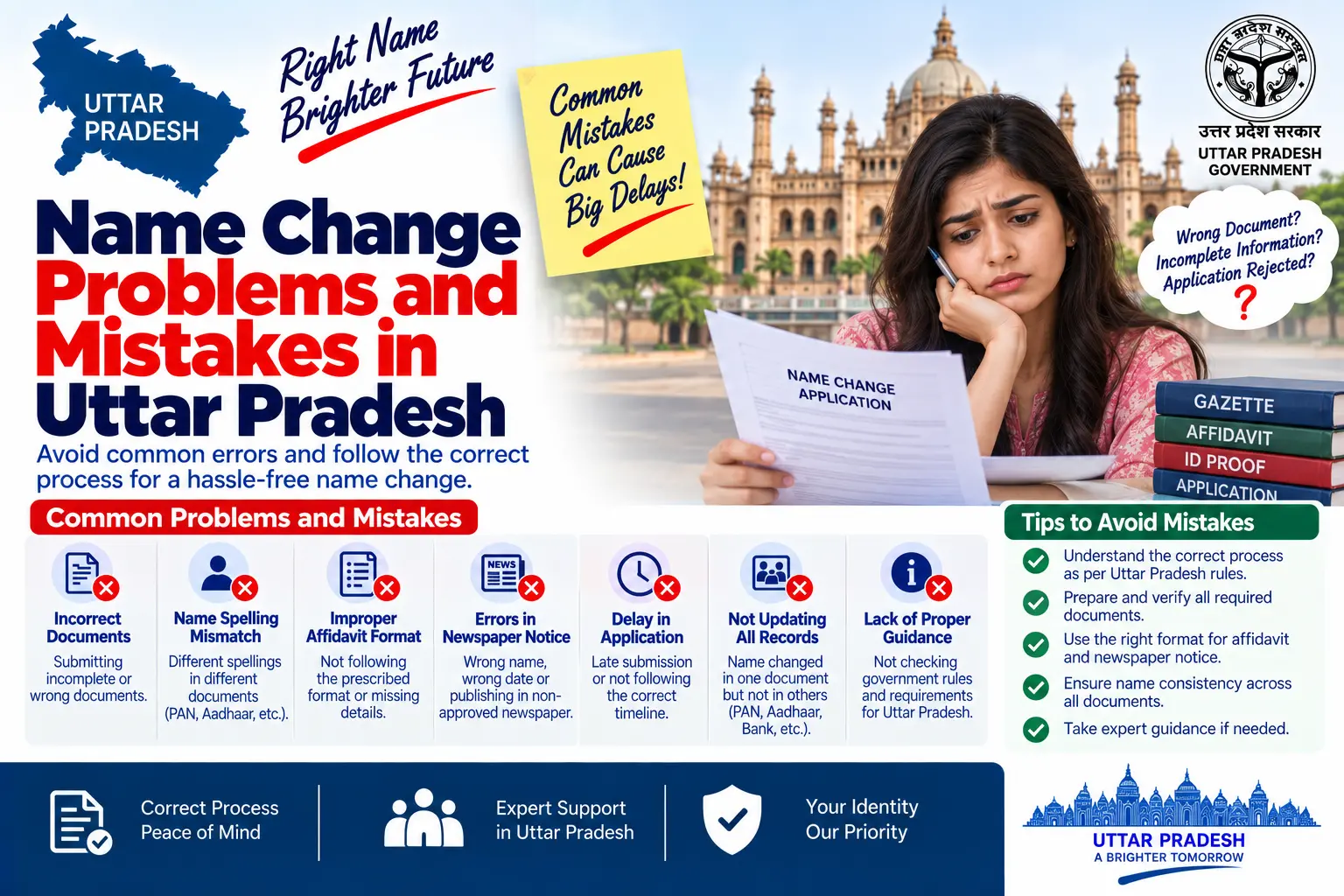
At a Glance
| First move, always | Ask for the reason in writing, with a reference |
| Who decides | Rarely the person at the counter |
| Four kinds of no | Gap, hold, wrong route, real refusal |
| Commonest by far | A document gap, which is not a refusal at all |
| What rarely helps | Arguing at the desk, or reapplying blind |
| What does help | A short written reply answering one point |
| Biggest single cause | Missing newspaper pages, at the passport counter |
| When to stop | When the problem is legal rather than documentary |
Key Takeaways
- The counter operator follows a checklist and has no power to waive anything.
- A verbal reason changes between visits; a written one names a single thing.
- Reapplying without answering the objection reproduces the same result.
- Most refusals are gaps you can close the same week.
- Some problems are legal rather than documentary, and no paperwork fixes those.
The Commonest Failures: Quick Facts
| Missing newspaper pages | Only the passport office asks; buy spares on the day |
| Aadhaar not updated first | Creates a mismatch at every later counter |
| Copies without originals | Originals are checked and returned |
| Name typed slightly differently | Use one written version everywhere |
| Applying before publication | The window is 25 to 45 days, not a date |
| Wrong office for the record | Apply where the record was made |
| Correction filed as a change | Doubles the cost for nothing |
| Gazette bought for a date of birth | Cannot work at any stage |
Table of Contents
- The one habit that works everywhere
- Four kinds of no
- Closing a document gap
- Writing the escalation
- Mistakes made before you reach a counter
- When documents cannot fix it
- Central Gazette: the complete process and file format
- Areas we serve
- Related guides
- Why choose our office
- FAQs
The One Habit That Works Everywhere
School, Tehsil, bank, Kendra, passport office, Board: the same sentence works at all of them. What it does is convert a vague refusal into a specific question, and specific questions have answers. A vague refusal has nothing to push against, which is why arguing feels like shouting into a wall.
If a written reason is declined, note the date, the counter and what was said, and write your own account of it. That still creates a record, and a record is what an escalation runs on.
Four Kinds of No
| What happened | What it means |
|---|---|
| A document gap | Nothing was accepted, so nothing was decided. Bring the item and return. This is the commonest by far |
| The file is on hold | It was accepted and stopped. The office wants a clarification, which is a question rather than a verdict |
| The wrong route | Your case needed a different application, office or category. Nobody refused you; you knocked on the wrong door |
| A genuine refusal | An actual decision with a stated ground. The rarest, and the only one that is really a no |
Working out which is yours takes one question and decides everything after. People who assume the worst reapply from scratch and pay twice; people who assume the best ignore an objection until a file lapses. Both are avoidable in ten minutes.
Closing a Document Gap
- Ask exactly what is missing before you leave, and write it down. Operators are usually specific if asked directly rather than argued with.
- Newspaper pages are the single biggest gap, at the passport counter, because it is the only office that asks for them again weeks after publication.
- Originals with copies closes the second commonest, since copies alone are not accepted anywhere.
- An Aadhaar carrying the old name causes refusals at counters that are not even asking about Aadhaar.
- Rebook once you have the item, which usually costs a slot rather than a fee.
None of this needs an escalation. It needs an afternoon. The value of identifying a gap correctly is that it stops you writing letters about something that was never a dispute.
Writing the Escalation
Address it to the office that can decide
The DIOS above a school, the Regional Passport Office above a Kendra, the branch manager above a clerk, the Regional Office above an Aadhaar counter.
Answer the exact point raised
Not the whole history. One question, one document, half a page.
Quote the reference number
So your letter joins the existing file instead of arriving as loose correspondence.
Enclose what resolves it
Copies, not originals, and list what you have enclosed at the end.
Ask for a written reply
Which sets up the next step if there is one, and usually means there is not.
Keep a copy and a receiving acknowledgment
Because a second escalation is built entirely on the record of the first.
Mistakes Made Before You Reach a Counter
Most of what goes wrong is decided at home, which is the encouraging part.
- Filing a change when a correction would do, which doubles the cost and the time for nothing. The test is on our correction versus change page.
- Updating documents in the wrong order, so an office compares your file against a record that has not caught up yet.
- Buying only one copy of each newspaper, when the passport office will want a set later and newsagents keep nothing.
- Applying before the gazette is published, when publication is a window of twenty-five to forty-five days rather than a date.
- Using slightly different spellings at different counters, which is why we tell every client to write the final name once and hand over the same paper everywhere.
- Paying for a gazette where none is needed, particularly for a date of birth, which no publication can change.
When Documents Cannot Fix It
Recognising this early is worth more than any escalation letter. A client who spends four months filing applications that were never going to succeed has lost four months they could have spent on the route that would.
Central Gazette: the Complete Process and File Format
Our core service: a large share of refusals trace back to a defective gazette file, so here is the whole thing as we run it from Lucknow, with the parts that fail most marked.
Stage 1: The affidavit
Fails when: the name does not match Aadhaar exactly, the affidavit is signed before reaching the notary, or a date of birth clause has been added, which no gazette can publish.
Stage 2: The Public Notice, in two copies
Fails when: only one copy is sent, the old name is handwritten instead of typed, or a witness gives a signature without their full name and address. Each witness gives signature, full name and address, and both sign both copies at one sitting.
Stage 3: The CD and CD-Certificate
Fails when: the CD holds a scan or a PDF instead of a real MS-Word file, or the text on the CD differs from the printed page. Open it on another computer and check the text can be selected.
Stage 4: Newspapers, fee, covering letter and dispatch
Publish in two newspapers and buy four copies
One Hindi daily of your district and one English paper. Complete original pages with masthead and date, never clippings, and two copies of each edition.
Pay Rs 1,100 on BharatKosh
Rs 1,700 for a minor. Check the function head, PAO and DDO on the confirmation screen and print two receipts.
Write the covering letter
To The Controller, Publication Department, Civil Line, Delhi 110054, with your mobile number and email so a query reaches you.
Assemble, check and photocopy
A full copy set kept at home is what saves you if anything is queried later.
Courier it, tracked
One to three days from most UP districts, with no counter to visit.
Search Part IV after 25 to 45 days
A Saturday date range covering your window, then download and print about five copies.
Never Argue, Always Write
This is the single most useful thing on the page and it is free. Clients who adopt it stop needing us for the small problems entirely, which is fine; we would rather be called for the cases that genuinely need a file prepared.
Gazette Fees, Time and the File
| Adult gazette fee | Rs 1,100 on BharatKosh |
| Minor, through a guardian | Rs 1,700 |
| Affidavit | Rs 100 to 500 including stamp paper and notary |
| Newspaper advertisements | A few hundred rupees per paper, plus spare copies |
| Escalation letter | Free; it is correspondence on an existing file |
| Reapplying from scratch | The full fee again, which is why it is a last resort |
| Publication window | 25 to 45 days after the Department receives the file |
The envelope in one line: covering letter with your phone and email, affidavit (notarised), Public Notice typed in two copies with two witnesses on each, CD in MS-Word format with the signed CD-Certificate, both complete newspaper pages, photo identity proof, address proof, photographs and the BharatKosh receipt.
Before You Escalate: Check These
- Work out which of the four situations you are actually in.
- Get the reason in writing with a reference before writing anything else.
- Answer the exact point raised, in half a page.
- Address it to the officer who can decide, not the counter.
After the Gazette: What Updates Next
Once a refusal is resolved, keep the correspondence with the rest of your file. A record that was once held sometimes attracts a question years later, and producing the earlier answer ends that conversation in a minute. Keep the gazette, both newspaper pages, the affidavit and every acknowledgment together in one place permanently.
What Other Websites Get Wrong
- Wrong: persuade the person at the counter. Right: they follow a checklist and cannot waive anything.
- Wrong: a refusal means your case has failed. Right: three of the four kinds of no are not decisions at all.
- Wrong: reapply after a problem. Right: answer the existing file, or you meet the same wall at the same cost.
- Wrong: a phone call is enough. Right: calls leave no record, and escalations run on records.
- Wrong: enough paperwork fixes anything. Right: some problems are legal and need a lawyer instead.
Areas We Serve in Uttar Pradesh
Escalations go to the office above the one that refused you, which differs by district and by department. We write these across all 75 districts, most often these:
| Western UP and NCR | Noida, Greater Noida, Ghaziabad, Meerut, Agra, Aligarh, Mathura, Bulandshahr, Muzaffarnagar, Saharanpur, Hapur, Firozabad |
| Rohilkhand and Bundelkhand | Bareilly, Moradabad, Rampur, Shahjahanpur, Budaun, Pilibhit, Bijnor, Amroha, Jhansi, Banda, Mahoba, Chitrakoot |
| Awadh and central UP | Lucknow, Kanpur, Unnao, Raebareli, Sitapur, Hardoi, Barabanki, Lakhimpur Kheri, Sultanpur, Ayodhya, Amethi, Bahraich |
| Purvanchal and eastern UP | Varanasi, Prayagraj, Gorakhpur, Azamgarh, Jaunpur, Ballia, Deoria, Mirzapur, Basti, Ghazipur, Mau, Sonbhadra |
Smaller districts see more refusals from unfamiliarity than from rule, because a counter that handles two of these a year is slower to recognise a correct file than one handling twenty a week. A written reply resolves most of those quickly. Our chamber is at Chamber No. 19, Sadar Tehsil, Sector 5, Gomti Nagar Vistar, Lucknow 226010, with the city guide on our Lucknow page. Call 9540003316 or WhatsApp 9540005002 from any district.
Related Guides on This Site
Whichever counter refused you, there is a guide for it here:
- gazette rejection reasons: stoppers, slowers and the ten-minute check.
- when a passport file is refused: the four meanings of no at that counter.
- when the school will not forward: the written application and DIOS escalation.
- when a college refuses your gazette: the four meanings of no.
- correction versus change: the test that prevents half of these.
- the newspaper guide: the spare copies that prevent the commonest gap.
- documents for the gazette file: the eight items and what each prevents.
- PAN and Aadhaar mismatch: the linking failure and how to fix it.
- can a gazette change a date?: no, and what to ask before paying.
- the full cost breakdown: government fees and our fees, line by line.
- contact the office: Lucknow office, phone and WhatsApp.
Why We Ask for the Exact Words
When someone calls about a refusal we ask them to read out or forward the exact wording rather than describe it, because a summary loses the one detail that decides everything. Often the answer is that nothing was refused at all and a document was simply missing. Vipin Chauhan, B.Tech LL.B, reads the objection before saying anything else.
- We place your case among the four: which decides whether this is an afternoon or a month.
- We get the reason in writing: since nothing can be answered until one thing is named.
- We answer rather than reapply: which is faster and costs nothing.
- We tell you when it needs a lawyer: on the first call, not after a fee.
Associate office at Chamber No. 19, Sadar Tehsil, Gomti Nagar Vistar, Lucknow, serving all 75 districts of Uttar Pradesh, Monday to Saturday, 10 AM to 6:30 PM. Call 9540003316 or WhatsApp 9540005002.
Forward the Exact Wording
Uttar Pradesh Name Change
Associate Office: Chamber No. 19, Sadar Tehsil, Sector 5, Gomti Nagar Vistar, Lucknow, Uttar Pradesh 226010
Head Office: Metro Pillar 337, Hardev Nagar, Street 1, Shop No 1 (Shri Sham Documentation)
Call: 9540003316
WhatsApp: 9540005002
Email: info@uttarpradeshnamechange.com
Hours: Mon to Sat, 10 AM to 6:30 PM
Forward the exact wording of the refusal, plus which office and which date. A summary loses the detail that decides everything.
Get Call and Name Change Format
Loading the enquiry form...
Name Change Problems: FAQs
A counter refused my documents. What do I do first?
Ask for the reason in writing with a reference number. That converts a vague refusal into a specific question, and specific questions have answers.
Should I argue at the counter?
No. The operator is checking your file against a list and has no authority to waive an item, so the conversation cannot go anywhere. Ask what is missing instead.
What are the four kinds of no?
A document gap, a file on hold, the wrong route, and a genuine refusal. Only the last is a decision, and it is the rarest.
What is the commonest cause of a refusal?
Missing newspaper pages at the passport counter, because it is the only office that asks for complete original pages weeks after publication.
Should I just reapply?
Rarely. A fresh file with the same gap meets the same objection and costs the full fee again. Answer the existing file unless nothing was ever accepted.
Who should I address my letter to?
The officer who can decide: the DIOS above a school, the Regional Passport Office above a Kendra, the branch manager above a clerk, the Regional Office above an Aadhaar counter.
How long should the letter be?
Half a page. One ground, one enclosure, the reference number, and a request for a written reply.
What if they will not give me a written reason?
Note the date, the counter and what was said, and write your own account. That still creates a record, and escalations run on records.
Are phone calls useful?
Not really. They leave no record, and repeated calls annoy without effect. A short written reply with a reference is what moves a file.
What mistakes cause most of this?
Filing a change when a correction would do, updating documents in the wrong order, buying only one newspaper copy, and applying before publication.
When does paperwork stop helping?
When the problem is legal rather than documentary: a parent objecting to a child's name change, a date outside the Board's window, or a refusal on a legal ground.
Does an escalation cost anything?
No. It is correspondence on an existing file. Reapplying from scratch is what costs the full fee again.
Official Sources
- The Department of Publication's guidelines for change of name, which set out the file the Central Gazette accepts.
- UPMSP correction practice, under which applications travel from a school through the District Inspector of Schools.
- Passport Seva structure, under which Regional Passport Offices decide objections while Kendras collect applications.
- UIDAI's escalation channels, including Regional Offices for requests beyond ordinary limits.
Facts here are checked against these sources and our own casework, including files recovered after being described as rejected. Office practice varies; the separation between the counter and the decider is the stable part.
The Short Version
The person who refused you almost certainly cannot decide anything; they are matching your file against a checklist, which is not a judgement. So the useful move is never persuasion. Ask for the reason in writing with a reference number, work out which of four things happened, and address your reply to whoever can actually decide. A document gap means nothing was accepted and nothing was refused, and it is the commonest by a wide margin. A file on hold is a question rather than a verdict. The wrong route means you knocked on the wrong door. Only a genuine refusal is a decision, and it is the rarest of the four. Half a page answering one ground, with one enclosure and a reference number, moves more than any number of phone calls, and it costs nothing.